

Negative SEO: What It Is, How It Works,
and How to Protect Your Site
Negative SEO is the practice of using malicious tactics to deliberately damage a competitor’s search engine rankings and online reputation. Rather than improving their own websites, attackers target a rival’s site with techniques designed to make it appear as though it violates search engine guidelines — triggering penalties that can wipe out months or years of legitimate SEO work.
While Google’s algorithms have become far better at filtering out manipulative signals, negative SEO attacks continue to surface — and they’ve expanded beyond link spam into reputation damage, content theft, and outright cybercrime. Smaller and newer sites remain especially susceptible, and reputation-focused attacks can affect businesses of any size.
Defending against negative SEO is a natural extension of the fundamentals covered in every comprehensive SEO guide.
What Is Negative SEO and How It Works
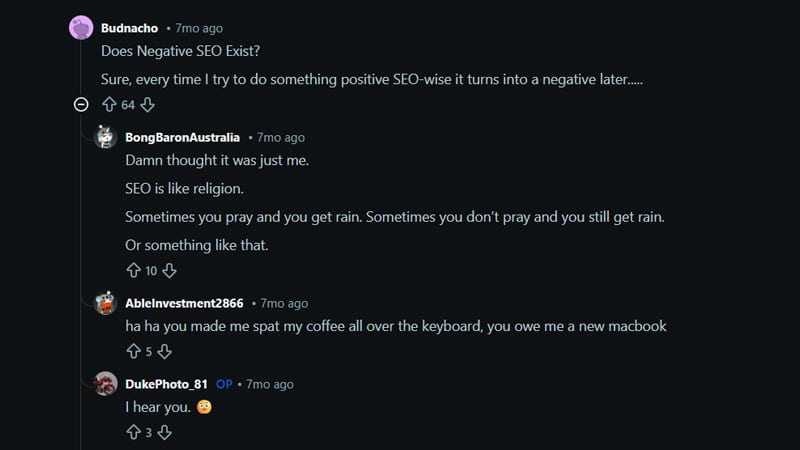
Negative SEO (or adverse SEO, as some call it) is an approach. Understanding the mechanics behind it, the role search engine algorithms play, and whether these attacks still carry real weight in 2026 is the first step toward knowing how to respond.
How negative SEO targets rankings
Negative SEO works by creating artificial signals that make a target website look like it’s violating search engine guidelines. The attacker isn’t trying to build their own authority, but to tear down a competitor’s.
Spammy link building is the most common version of this. If Google’s systems detect that a site has an unnatural backlink profile full of low-quality, keyword-stuffed links, they may lower that site’s rankings. Negative SEO exploits this by pointing those kinds of links at a competitor who never asked for them.
But link manipulation is only one avenue. Attackers also steal content, hack websites, file false DMCA complaints, and flood review platforms with fabricated ratings. Each tactic targets a different vulnerability, and the goal is always the same: make the competitor’s site look worse in the eyes of search engines or users.
The role of algorithm updates
Google’s algorithm updates (e.g., Penguin targeting link spam, Panda targeting thin content) were built to penalize manipulative SEO practices. Ironically, those same updates created the mechanisms that negative SEO exploits. If spammy links trigger a penalty, then pointing spammy links at someone else becomes a weapon.
That said, Google has adapted. Modern versions of these algorithms are better at evaluating links in context and discounting obvious spam without penalizing the target. The Disavow Tool in Google Search Console gives site owners a way to flag suspicious links manually. And Google’s official position has been consistent: focus on your own site rather than worrying about external attacks.
These protections are real, but they aren’t perfect.
Is negative SEO still effective?
The honest answer to this is the most typical answer to most SEO questions – it depends.
Established sites with a deep, diverse backlink profile and strong domain authority are unlikely to suffer lasting damage from a spammy link attack. Google’s systems can identify and ignore the noise in most cases.
Newer sites with a thin link profile and limited authority face a different situation. A sudden influx of toxic backlinks can distort the site’s entire link signature, and the algorithms may not distinguish the attack from genuine manipulation.
Reputation-based attacks bypass algorithms entirely. A flood of fake one-star reviews on Google Business Profile damages trust and conversion rates directly. Smear campaigns and false DMCA takedowns operate outside the ranking system altogether.
Negative SEO is harder to execute successfully than it was five years ago. Calling it extinct, though, would be careless.
Types of Negative SEO Attacks

Negative SEO attacks come in many forms, and they don’t all work the same way. Some target your backlink profile, others go after your content or technical infrastructure, and some skip the algorithm entirely and attack your reputation head-on.
Link-based attacks
The most common form of negative SEO involves manipulating a competitor’s backlink profile. This breaks down into two approaches.
Toxic link building is the first: flooding a target site with thousands of low-quality backlinks from link farms, gambling sites, adult content pages, and foreign-language spam networks. These links are often stuffed with exact-match anchor text, designed to make it look like the target ran a link scheme.
Link removal fraud is the second. The attacker contacts websites that link to the target, impersonates someone from that business, and requests that legitimate backlinks be taken down — usually claiming a site redesign or link audit. The result is a weakened backlink profile, and the target may never realize why their referral traffic dropped.
Content and technical attacks
Content scraping involves copying a site’s pages and republishing them across multiple domains — sometimes before the original has even been indexed. When search engines encounter duplicate content, they have to decide which version to rank. Smaller sites without strong domain authority can lose that contest to the scraped copy.
Hacking remains a direct threat. Attackers who gain unauthorized access can inject spammy code, insert hidden links, redirect URLs to malicious pages, or delete content entirely. Google may then flag the compromised site with security warnings in search results, which pushes visitors away and tanks click-through rates. This is why good technical SEO (besides focusing on performance and crawlability) is also a line of defense. The damage to rankings and user trust can persist long after the hack is reversed.
Reputation and server-level attacks
Not all negative SEO targets search algorithms. Some target reputation directly through tactics that include:
- Fabricating negative reviews across Google Business Profile, Yelp, or industry platforms
- Creating fake social media profiles to spread misinformation about a business
- Filing false DMCA takedown notices to remove legitimate content from search results
- Running defamatory blog posts or forum campaigns
Hotlinking operates at the server level — attackers embed a target’s images or media on external pages, forcing the target’s server to handle the bandwidth.
Aggressive bot crawling achieves a comparable effect, consuming server resources and degrading page load speed. Since performance is a ranking factor, even temporary slowdowns can affect visibility.
How to Detect a Negative SEO Attack

The sooner you spot a negative SEO attack, the less damage it can do. Most attacks leave visible traces — the challenge is knowing what to look for and having the right tools in place to catch them early.
Warning signs
Early detection is what separates a minor inconvenience from a serious ranking loss. The red flags to watch for include:
- Sudden ranking or traffic drops that don’t align with algorithm updates or changes you made
- An unnatural spike in backlinks from irrelevant, low-quality, or foreign-language domains
- Loss of existing quality backlinks you didn’t request to be removed
- Your content appearing word-for-word on domains you don’t control
- A surge of fake negative reviews across one or more platforms
Any one of these in isolation may have an innocent explanation. Multiple signals appearing at the same time almost certainly point to an attack.
Monitoring tools
No single tool catches everything. A proper detection setup combines several layers.
Google Search Console should be your first line of defense. Set up email alerts for manual actions, security issues, and indexing anomalies — it’s free and connects you directly to how Google sees your site.
Semrush and Ahrefs handle backlink monitoring. Both let you run regular backlink audits, track changes in anchor text distribution, and flag links with high toxicity scores. Semrush evaluates links against more than 45 quality markers, which makes it effective at catching suspicious patterns early.
Copyscape and other plagiarism detection tools help you find unauthorized copies of your content across the web.
Google Alerts, set up for your brand name, domain, and staff names, can catch smear campaigns and fake profiles before they gain traction.
Building a detection routine
One-off audits aren’t enough. The difference between sites that catch attacks early and those that don’t comes down to routine.
Set a schedule (weekly or biweekly) for reviewing your backlink profile and brand mentions. Establish a baseline understanding of your normal link velocity, anchor text ratios, and review patterns. When you know what “normal” looks like, anomalies stand out right away.
Automated alerts handle the rest. Most monitoring tools allow you to configure notifications for sudden changes, so you don’t have to rely on remembering to check manually.
How we detected toxic link attacks on our website
Here is a textbook example of a toxic link attack targeting this The Growth Spice, detected through Ahrefs on May 2, 2026.
A spam domain (shopbetreiber-blog.shop) published a fabricated “testimonial” article with a keyword-stuffed title promoting an SEO service called SEOExpress.

We get toxic links on a daily basis and almost all of them get redirected to SEOExpress. Embedded in this particular post was a reference to thegrowthspice.com – framed as a site that was “invisible online and stuck on page 5 of Google” before allegedly using SEOExpress’s services. The post cannot be accessed and once you click on the link, it leads to their website.
This attack combines two tactics simultaneously:
- Toxic link building – a low-quality domain pointing an unsolicited backlink at the target site
- Reputation damage – associating the target brand with a competitor’s promotional content, potentially to confuse users or manipulate brand-related search signals
A few details worth noting from the Ahrefs report:
- The link is tagged NOFOLLOW, which limits its direct ranking impact, but nofollow links from spam domains can still appear in audits and create noise in your backlink profile.
- The source domain has 8,801 external links leading from the page and a total 83.1 million links leading from the entire domain, which is a hallmark of link farm network. It also tells us that The Growth Spice is not the only website being attacked.
- The attack was detected within 48 hours, a reminder of why continuous backlink monitoring matters
The correct response here is to log the domain, add it to a disavow file in Google Search Console, and document the pattern in case it escalates into a coordinated campaign. We disavowed links from a total of 45 domains, all of them leading to SEOExpress.
How to Protect Your Site from Negative SEO

Defending against negative SEO is a mix of building strong foundations before anything happens and knowing how to react quickly when it does. The good news is that the same practices that make your site rank well also make it harder to attack.
Proactive defenses
The strongest protection against negative SEO is a well-maintained site with solid foundations.
Site security comes first. Implement SSL/HTTPS, use strong and unique passwords for every access point, keep your CMS, plugins, and themes updated, and install a reputable security plugin that blocks brute-force login attempts and monitors for unauthorized changes. When signing up for organic SEO services, ensure your partners follow these same security standards on any work they carry out on your site.
Regular automated backups are your safety net. If your site is hacked and content is altered or deleted, a recent backup lets you restore quickly rather than rebuilding from scratch.
Beyond security, your backlink profile and brand presence need continuous attention:
- Run scheduled backlink audits to establish and maintain a baseline
- Set up Google Alerts for your brand name, domain, and personnel
- Monitor review platforms where your business is listed
- Track page speed and server performance for unexplained degradation
Above all, build strong domain authority. A site with a deep, diverse portfolio of quality backlinks and strong content absorbs spammy link attacks far more easily than a site with a thin profile. Good SEO practices are, in the long run, the best shield against bad SEO tactics.
Reactive measures
When an attack is already underway, speed matters.
Toxic link attacks — use the Disavow Tool in Google Search Console to tell Google to ignore the malicious backlinks. Be precise with this — disavowing legitimate links by mistake can hurt your own rankings.
Content scraping — contact the hosting providers of sites that copied your content. If they don’t respond, file a DMCA takedown with Google to have the infringing pages removed from search results.
Fake reviews — document the patterns (timing, language, reviewer profiles) and submit reports through the platform’s fraud reporting process. Persistence matters here, because platforms don’t always act on the first request.
Server-level attacks — for hotlinking or aggressive crawling, configure your .htaccess file to block unauthorized media embedding, and contact your hosting provider about implementing rate limiting or IP-level blocking.
Long-term resilience
Negative SEO defense is an ongoing practice. The sites that weather attacks best are those that treat monitoring and security as routine rather than reactive.
That means reviewing your defenses periodically, staying informed about new attack methods, and treating your backlink profile and online reputation as assets that need active maintenance. When your baseline is strong and your monitoring is consistent, most negative SEO attempts become more of an annoyance than a threat.
A Well-Built Site Is The Best Defense
Negative SEO is less effective than it once was. Google’s algorithms have matured, the Disavow Tool provides a direct line of defense, and the cruder tactics that worked a decade ago are increasingly filtered out automatically. But that doesn’t mean they’re gone completely. Reputation attacks, content theft, and targeted campaigns against smaller sites remain real risks — and the attackers continue to adapt.
The pattern across every form of negative SEO defense is the same: know your baseline, monitor consistently, and respond quickly. The sites that invest in strong SEO practices, regular audits, and proactive security rank better and are harder to attack in the first place. A well-built site is its own best defense.
Frequently Asked Questions (FAQ)
1. What is negative SEO?
Negative SEO is the deliberate use of malicious tactics (such as spammy link building, content scraping, hacking, or fake reviews) to harm a competitor’s search engine rankings and online reputation. The attacker’s goal is to make the target site appear to violate search engine guidelines, triggering penalties or loss of visibility.
2. Is negative SEO illegal?
Some forms are clearly illegal. Hacking and malware injection fall under computer fraud and cybercrime laws in most jurisdictions. Filing false DMCA takedowns and posting fabricated reviews may violate civil defamation or fraud statutes. Spammy link building occupies a grayer area legally, though it violates search engine terms of service.
3. Can negative SEO hurt an established website?
It’s much harder. Sites with strong domain authority and a diverse backlink profile can absorb toxic link attacks without noticeable damage. That said, reputation-based attacks (fake reviews, smear campaigns, false takedown notices) can affect businesses of any size, because they target customer trust rather than search algorithms.
4. What should I do first if I suspect a negative SEO attack?
Start with Google Search Console. Check for manual actions, security warnings, and unusual indexing changes. Then run a backlink audit through a tool like Semrush or Ahrefs to identify suspicious new links. Document everything (timestamps, URLs, screenshots) before taking corrective action.
5. Does Google penalize sites that are victims of negative SEO?
Google’s stated goal is to identify and ignore malicious signals rather than punish the victim. The reality is that algorithmic detection isn’t flawless, and some sites have experienced ranking drops from attacks. The Disavow Tool exists for cases where Google’s systems haven’t automatically filtered out the toxic links.
