

How to Build High-Quality Backlinks Without Getting Penalized
If you’ve spent any time in the SEO trenches, you already know this: backlinks can make or break your visibility on Google. But what used to work a decade ago might get you penalized today. That guest post farm you leaned on in 2015? Google’s way smarter now.
Despite algorithm changes, spam crackdowns, and the rise of AI-generated content, SEO backlinks are still one of the top three ranking factors in search engine optimization. They’re the digital equivalent of word-of-mouth – signals that tell Google, “Hey, this content is trustworthy, useful, and worth ranking.”
Frankly, building top notch backlinks isn’t easy. There’s a fine line between strategic outreach and spammy tactics that could torpedo your rankings. That’s why this guide exists. And once you nail it properly, you’ll understand why link building is among the most impactful off-page SEO techniques
In the next few sections, I’ll walk you through the modern, Google-approved ways to earn powerful backlinks without tiptoeing around penalties. We’ll look at what makes a backlink “high-quality,” explore strategies like digital PR and linkable assets, and flag the outdated tactics you need to avoid like the plague.
Table of Contents
What is a Backlink?
Let’s strip it back to the basics – what exactly is a backlink?
A backlink is simply a hyperlink from one website to another. When another site links to yours, it’s like a vote of confidence in your content. It tells search engines, “Hey, this page is worth checking out.”
But not all votes are created equal.
Think of the internet as a giant networking event. A backlink from a well-known industry leader is like getting name-dropped by the keynote speaker – it carries weight. Meanwhile, a link from a random, low-authority blog is more like your cousin’s friend saying, “Yeah, I’ve heard of them.” Helpful? Maybe. Influential? Not so much.
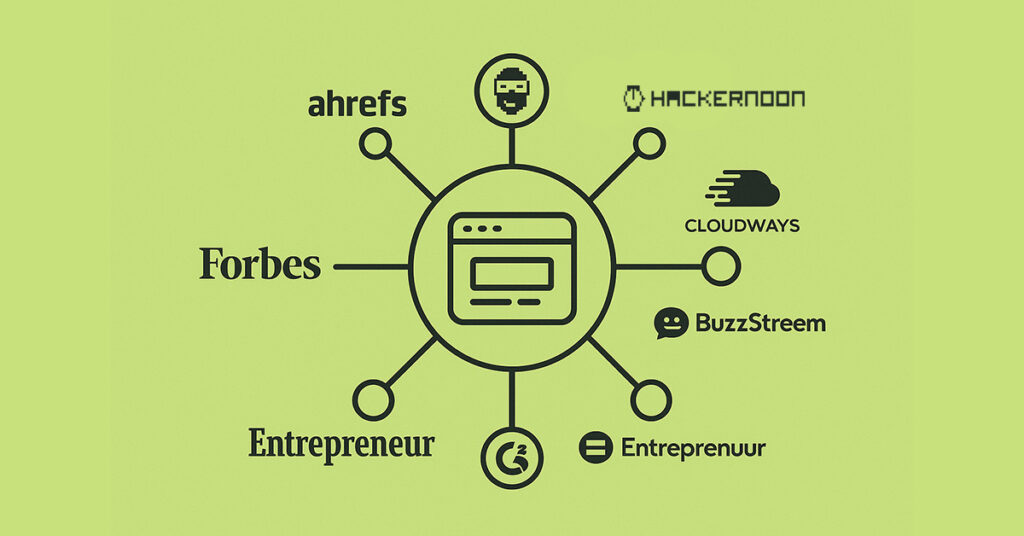
From Google’s point of view, backlinks help measure three core signals:
- Authority – Is this link coming from a trusted source?
- Relevance – Does the linking site share your topic or industry?
- Trust – Is the link earned naturally or was it manipulated?
These links are part of Google’s original algorithm (PageRank) and they still play a pivotal role today. The difference? Google now has a much sharper eye for quality versus quantity. If you’re collecting backlinks like Pokémon cards (especially from shady or irrelevant sites) you’re not building SEO. You’re building a risk profile.
So, if backlinks are still one of the strongest signals in SEO, the real question is how to get them the right way.
Up next: what separates a “meh” backlink from one that brings the most link juice.
What Makes a Backlink Superior?
Backlinks are like recommendations on your SEO resume, but not every recommendation is worth the same. Some boost your credibility. Others are ignored. And a few might even get your site into trouble.
So, what separates a ho-hum link from a high-quality one that actually helps your rankings?
Relevance is the foundation
Let’s say you run a SaaS platform for small business accounting. A backlink from an accounting software review site? Golden. A link from a recipe blog about vegan cupcakes? Not so much.
Search engines place a premium on topical relevance. The more aligned the linking site is with your niche, the more that link contributes to your authority in that space.
Think of it this way: if you’re getting links from sites your audience actually reads and trusts, you’re doing it right.
Authority adds weight
All backlinks aren’t created equal because all websites aren’t created equal.
Google assigns authority (a mix of credibility, trust, and history) to every domain. A link from Forbes, HubSpot, or a respected government site (like a .gov) carries a lot more weight than one from your buddy’s startup blog with five posts and a logo made in Canva.
Tools like Ahrefs, Moz, or SEMrush let you analyze a site’s domain authority before targeting it for outreach. Use them. It’s like checking someone’s references before hiring them.
Context matters (now more than ever)
Where and how the backlink appears is critical.
Natural backlinks (in-text) link inside a useful, well-written article? That’s top-tier. A buried footer link, random blogroll shoutout, or a standalone URL on a blank page? Google’s algorithm sees right through it.
Also, anchor text (the clickable text of a hyperlink) plays a role. When it includes relevant keywords naturally, that’s a plus. Just avoid keyword stuffing or forced anchors because it can look manipulative.
Editorially earned vs. easily placed
Here’s a simple rule of thumb: the harder a backlink is to earn, the more valuable it tends to be.
Editorial backlinks (those you earn by providing value, not paying or begging) are gold. They show trust and genuine interest from another content creator. On the flip side, links that are easy to place (think: spammy directories or forum comments) rarely move the needle, and may even trigger penalties.
In short, a high-quality backlink is relevant, authoritative, context-rich, and editorially placed.
Next up: how to actually build backlinks that fit this bill.
The Right Way to Build Backlinks
Earning quality backlinks isn’t about shortcuts or secret tricks – it’s about strategy, consistency, and giving people a reason to link to you. Let’s break down the proven methods and link building tips that work today and keep you in Google’s good graces.
1. Guest posting (when done right)
Yes, guest posting still works, but only if it’s approached with authenticity.
The key is to target relevant websites in your niche, pitch genuinely valuable content, and include a contextual backlink within the article (not your author bio, if you can avoid it).
Skip mass outreach templates. Editors can smell those from a mile away. Instead, personalize your emails and pitch articles that fill a content gap on their site.
Bonus tip: Use tools like Ahrefs to find sites that already accept guest contributions in your niche.
2. Digital PR (be your own publicist)
This is where SEO meets storytelling.
Digital PR is about earning media coverage that includes backlinks. Think: launching a data-driven report, unique study, or an eye-catching infographic. Journalists love original data and they’re always looking for credible sources to cite.
Sites like Business Insider, Search Engine Journal, and TechCrunch often link out when citing stats, quotes, or research. So become that source.
If your brand can say something interesting about a timely topic, pitch it to relevant outlets. Or piggyback on news trends (aka “newsjacking”) with your unique take.
3. HARO and journalist outreach
HARO (Help a Reporter Out) is a goldmine if you’re willing to put in the time.
Sign up for daily journalist queries. If a writer is covering your area of expertise – pitch a short, snappy quote. If selected, you’ll often land a backlink from high-authority media outlets like Forbes, Mashable, or Inc.
4. Create linkable assets
If your content doesn’t give people a reason to link to it, why would they?
That’s where linkable assets come in: ultimate guides, free tools, templates, calculators, or visual explainers. These are the kinds of resources others naturally reference in their own content.
Ask yourself: would you link to it if you stumbled across it online? If the answer isn’t an instant yes, it’s not linkable enough.
In short, quality SEO backlinks aren’t found, they’re earned. And to earn them, you need to create value worth sharing.
5. Strategic ABC link exchanges
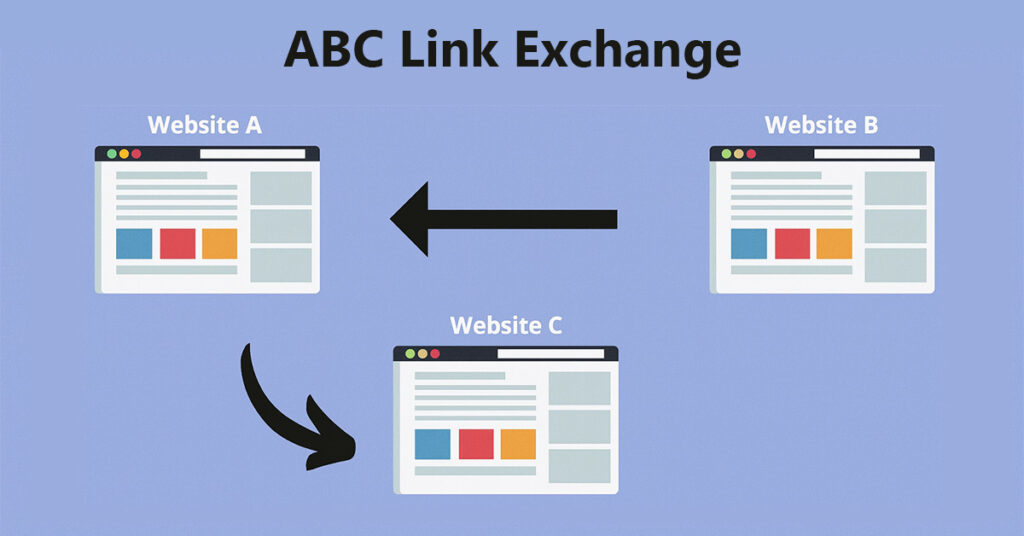
Old-school reciprocal links (you link to me, I link to you) are risky. But ABC link exchanges (where Site A links to Site B, Site B links to Site C, and Site C links back to Site A) can fly under the radar when done sparingly and strategically.
The key is relevance and moderation. These shouldn’t be your primary link strategy, but when executed with reputable partners and contextual relevance, they can diversify your link profile without raising red flags.
Just remember: link swaps done solely to manipulate rankings are against Google’s Webmaster Guidelines. Focus on building partnerships, not just exchanging favors.
Link Building Strategies to Avoid
For every ethical, effective link-building tactic out there, there’s a sketchy shortcut that can backfire. And while some of these black-hat tactics might still “work” short-term, they’re playing with fire because Google’s spam filters are smarter and more unforgiving than ever.
Let’s walk through the link-building tactics you should either avoid completely or handle with extreme caution.
Buying links (thread carefully)
Google’s official stance is clear – paying for website backlinks is against its guidelines. If you’re caught participating in link schemes, your site could be hit with a manual action that tanks your rankings.
This includes direct payments, exchanging products or services for links, or even using platforms that “sell” guest post placements in bulk.
That said, the reality is more complex.
If you’re working with a high-authority site in your niche, and the link is editorially placed within genuinely useful content (and not flagged as “sponsored” or “nofollow”), many SEOs argue it’s both safe and smart. Especially if the content drives actual traffic and brand exposure beyond SEO value.
The key? Discretion and quality.
Buying a link on a respected publication where your audience actually hangs out (and where your content adds legitimate value) is vastly different from dropping $30 on a link from a link farm with spun content and 15 outbound links per page. If you do go this route, do it sparingly, do your homework, and make sure the value extends beyond just SEO. Because if the link disappears tomorrow, it should still have been worth it.
Low-quality directory submissions
There was a time when submitting your website to hundreds of online directories gave you a boost. That time has passed.
Most directories today are either ignored by search engines or viewed as spammy link farms. While a handful of legitimate directories (like industry associations or niche-specific listings) still hold value, the rest are SEO junk food: lots of filler, no nutritional value.
Spam comments and forum links
Dropping your link in the comment section of random blogs or on forums like it’s 2006? Don’t.
Not only is this practice heavily nofollowed (meaning it passes no link equity), but it’s also an easy way to get your brand labeled as spammy. If you’re going to engage in forums or communities, do it for the conversation – not the backlink.
Link exchanges and link circles
Basic “you link to me, I’ll link to you” swaps are obvious and usually transparent to search engines. But even worse are link circles – multiple sites trading links in a closed loop in an attempt to mask manipulation. These schemes can collapse your SEO efforts in a heartbeat.
Remember: links should be earned, not traded like baseball cards.
Private Blog Networks (PBNs)
A PBN (Private Blog Network) is a network of sites created solely to link to one another (or a central “money site”). They’re often disguised to look legitimate, but underneath the hood, they share hosting, design templates, and backlinking patterns that Google can spot easily.
Using PBNs might bring a short spike, but they almost always end in disaster.
Tools for Backlink Quality Analysis
You don’t need to guess whether a backlink helps or hurts you. There’s a whole toolkit available to evaluate your links with the same precision Google aims for. Here are some of the best tools (free and paid) for backlink quality analysis and keep your SEO strategy squeaky clean.
Ahrefs
If you’re serious about backlinks, Ahrefs is as good as it gets.
With Ahrefs’ Site Explorer, you can:
- See all backlinks pointing to your domain (or a competitor’s)
- Measure link authority via Domain Rating (DR) and URL Rating (UR)
- Identify lost or broken website backlinks
- Spot spammy links from low-quality or irrelevant sites
It also offers an “anchor text” breakdown, critical to ensure you’re not over-optimizing with keyword-rich anchors (a common red flag).Use it not just to evaluate your own links but also to spy on competitors and see where their top links come from.
SEMrush
SEMrush’s Backlink Analytics and Audit tools provide a comprehensive view of your backlink profile.
What makes SEMrush powerful is its toxicity score, which flags potentially harmful links and groups them by threat level. You’ll also get suggestions for disavow files – great for preemptive cleanup if you’ve inherited a messy link profile.
Bonus: Their “Link Building Tool” helps you build a list of outreach targets based on competitor links.
Moz Link Explorer
Moz Link Explorer may not have the deepest index compared to Ahrefs or SEMrush, but it’s incredibly beginner-friendly and solid for quick link checks.
Its Domain Authority (DA) metric is well-known, and its spam score gives you a fast way to spot potentially risky backlinks. It’s perfect for a bird’s-eye view before diving deeper with other tools.
Google Search Console
Don’t overlook the free tools from the source itself.
Google Search Console (GSC) offers a “Links” report showing:
- Top linked pages
- Top backlinking domains
- Anchor text data
While it won’t show link quality metrics like DR or toxicity, GSC data is straight from Google – so if something is showing up here, it’s already on their radar.
Use it alongside Ahrefs or SEMrush to cross-reference and validate findings.
Majestic SEO
Known for its Trust Flow and Citation Flow, Majestic helps visualize how influential a site’s backlinks are. It’s especially useful for assessing the trustworthiness of domains you’re considering for outreach or partnerships.
Building links starts with analysis, but in the end it’s about finding and connecting with the right people.
Pitchbox
Pitchbox automates outreach campaigns with CRM-like functionality. It’s perfect for scaling guest post pitches, broken link building, or PR campaigns – with email sequences, follow-ups, and performance tracking built-in.
Respona
Tailored for digital PR and HARO-style outreach, Respona combines backlink prospecting with AI-assisted email creation. It even integrates with your backlink analysis tools to surface pitch-worthy targets.
Hunter.io
Hunter is ideal for finding email addresses tied to specific websites. Just enter a domain, and it pulls verified contacts, perfect for personalizing your link outreach and improving your response rates.
These tools let you monitor, protect, and optimize your backlink profile like a pro. Up next: we’ll wrap it all up with a best practices checklist to keep your link-building squeaky clean and future-proof.
Backlink Building Best Practices: A Quickfire Checklist
You’ve now got the strategies, tools, and insights, but even the best SEO plans can go off the rails without a solid set of ground rules. So before you dive into outreach or hit publish on your next guest post, run through this checklist to make sure your backlinks aren’t just plentiful, but powerful and penalty-proof.
Focus on relevance first
Would your target audience actually visit the site you’re trying to get a backlink from? Is the linking site related to your industry, niche, or topic?
If not, think twice. Relevance trumps raw authority every time.
Aim for links within the body of content, not sidebars or footers. Avoid no-value links like comment spam or user-generated content platforms unless they offer genuine community value.
Diversify your link profile
Mix up your tactics: guest posting, digital PR, HARO, linkable assets, and even occasional ABC exchanges. Vary your anchor text – don’t keyword-stuff every link with your target phrases.
Vet every link opportunity
Use Ahrefs, SEMrush, or Moz to check domain authority, spam scores, and traffic metrics. Avoid sites that look like PBNs or are loaded with outbound links.
When in doubt: if you wouldn’t proudly show the site to a client or boss, don’t take the link.
Build relationships, not just links
Link building works best when it’s relationship-driven, not transactional. Get involved in communities, share content, offer value, and follow up with people – even when there’s no immediate SEO gain.
The most powerful links often come from people who trust you, not strangers who got a cold pitch.
Don’t set it and forget it
Audit your backlinks regularly. Use Google Search Console and SEMrush to monitor for toxic links or sudden changes. Be ready to disavow suspicious backlinks if needed.
Backlink profiles age. You need to keep them fresh and clean.
End of the Road
We mean “end of the road” for this article, but not for your link building journey. That’s just the beginning and we’ve touched the tip of the link building iceberg with this SEO guide. Be sure to check our other articles that deconstruct it to details.
Backlinks still matter, maybe more than ever. But the way you build them has evolved. It’s not about volume. It’s about value. The best backlinks aren’t tricks, they’re the result of smart strategy, great content, and genuine connections.
You don’t need thousands of links. You need the right ones. And with the frameworks we’ve covered here, you’re ready to go get them without risking a single penalty.
Frequently Asked Questions (FAQ)
1. What is a backlink in simple terms?
A backlink is a hyperlink from one website to another. It’s like a vote of confidence – telling search engines your content is trustworthy and worth ranking.
2. What makes a backlink high-quality?
High-quality backlinks come from authoritative, relevant websites. They’re placed naturally within content and offer real value to readers – not hidden in footers or spammy directories.
3. Are backlinks still important for SEO today?
Absolutely. Backlinks remain one of Google’s top three ranking factors. Quality links help improve your site’s authority, visibility, and traffic.
4. Is buying backlinks safe or not?
Google discourages it. However, some SEOs invest in backlinks from reputable sites where the content is high-quality and the link placement is editorial. This can work, but it carries risk.
5. What is an ABC link exchange?
It’s when Site A links to B, B links to C, and C links back to A. This three-way method can appear more natural than direct swaps, but should be used cautiously and only with relevant, trustworthy partners.
6. What link-building methods should I avoid?
Avoid low-quality directories, spammy blog comments, excessive reciprocal linking, link farms, and private blog networks (PBNs). These tactics often do more harm than good.
7. How can I check if my backlinks are helping or hurting?
Use tools like Ahrefs, SEMrush, Moz, or Google Search Console to analyze link quality, track referring domains, and identify toxic backlinks that may need disavowing.
8. What tools are best for outreach and link acquisition?
Pitchbox, Respona, and Hunter.io are great for finding contacts, automating outreach, and managing relationships with site owners or journalists.
9. How many backlinks do I need to rank?
There’s no magic number. It depends on your niche and competition. Focus on consistent, high-quality link building rather than chasing quantity.
10. How often should I audit my backlink profile?
Quarterly is ideal for most sites. If you’re actively building links or in a competitive space, consider monthly audits to stay ahead of potential issues.