

Ultimate Guide to Launching and Growing a Successful eCommerce Business
Starting an ecommerce business today is about selling products online, of course, but the story both expands and deepens once you get serious about it. It’s really about building a brand that people trust, remember, and return to. The beauty of ecommerce lies in its accessibility. You don’t need a massive budget, a physical storefront, or a big team to begin. What you do need is clarity, strategy, and the willingness to adapt to an industry that moves at lightning speed.
Think of ecommerce as the modern version of opening a shop in the busiest marketplace imaginable, but instead of foot traffic, your visitors arrive through search engines, ads, emails, and social platforms. The right approach can put your store in front of thousands of potential buyers in a single day. But here’s the catch: competition is fierce, and attention spans are short. That’s why building a successful online store goes far beyond uploading a few products and hoping for sales.
This guide will walk you through what it actually takes to launch and grow an ecommerce business that works in today’s environment. From choosing the right products and defining your audience, to setting up operations, handling logistics, and creating a marketing strategy that cuts through the noise – you’ll learn how to structure your efforts for results.
Ecommerce rewards those who are focused, data-driven, and willing to test and iterate. If you’re ready to step into the world of digital selling, this guide is your blueprint. By the end, you’ll not only understand how to start, but how to grow with confidence in a space that’s constantly evolving.
Table of Contents
What is an Ecommerce Business?
Ecommerce means any business deal that happens on the internet. This shortened version of electronic commerce includes buying and selling products and services through online platforms. Businesses and consumers can access these services any time of day.
The first online transaction in 1994 sparked a retail revolution. The industry has grown beyond expectations since then – it is projected to reach $7.89 trillion by 2028. These numbers show incredible growth for a sector that represents 16.4% of total sales in the fourth quarter of 2024. Brick-and-mortar stores grew by just 2.3% year over year, while ecommerce sales surged 7.6% to $1.8 billion in the third quarter of 2023.
The best part? You can start an ecommerce business with just $100. This minimal investment covers a domain name and store theme, making it one of today’s most affordable business ventures.
The basic concept is simple: sellers list their items online and buyers purchase them through digital platforms. Yet the backbone that supports these transactions runs deeper than most people realize.
Once you learn how to start an eCommerce business, why not ride the wave?
Running an ecommerce business brings unique benefits. Your store stays open 24/7, so sales happen even during your sleep. Starting costs stay lower than traditional stores. You’ll need just a domain name and hosting package instead of paying rent and overhead costs.
Your online store can reach customers worldwide. Recent studies show 59% of online shoppers buy from other countries. This opens up international sales opportunities without location limits.
Digital stores give you valuable customer data. You learn about shopping behavior, customer priorities, and market trends. These insights help boost your sales and conversion rates.
The digital retail world changes faster every day. Ecommerce made up just 5% of total retail sales in 2011. By second quarter 2024, this number jumped to 16%. This growth trend shows no signs of stopping as ecommerce becomes crucial to the global economy.
Starting an online store has never been easier. Many platforms now offer templates and user-friendly tools that anyone can use. Small and large businesses can quickly build their online presence.
Lower costs make ecommerce perfect for newcomers. Unlike traditional stores, you can grow step by step and increase spending as your sales grow. This creates a flexible path to business ownership.
An ecommerce business breaks free from physical store limits. You can sell to anyone with internet access. Adding online sales to your existing store or starting a new digital venture opens endless possibilities to connect with customers and grow your ecommerce business.
Choose What to Sell and Who to Sell To
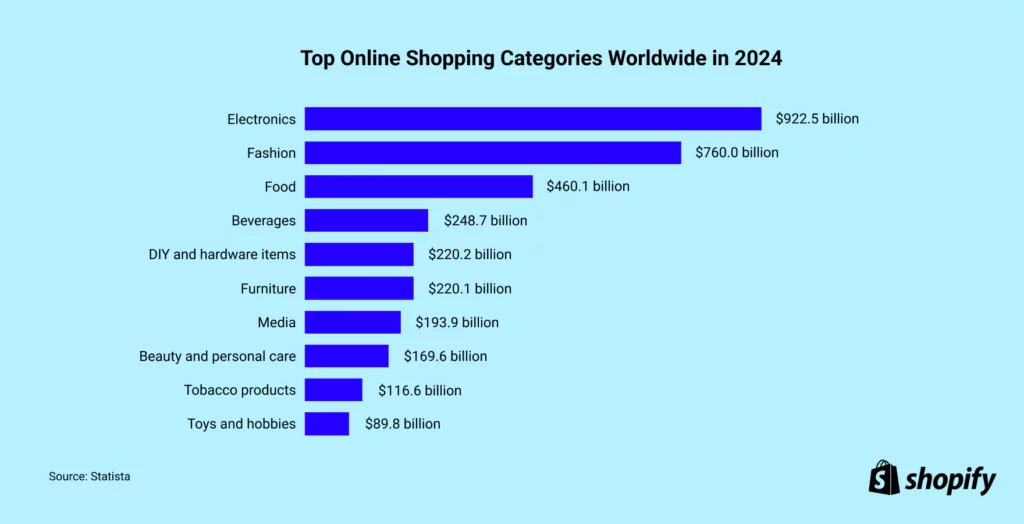
So, how to get into eCommerce? What to begin with? Your ecommerce business success depends on picking the right products and target audience. Luckily, there’s hundreds of ecommerce business ideas to choose from by analyzing current market performance of products sold. And your choice will shape everything from your marketing approach to pricing strategies.
Understand different ecommerce models
Several distinct eCommerce business models are in your disposal. Each comes with its own set of advantages and challenges. Your available resources, goals, and target customers should guide your choice:
- Business-to-Consumer (B2C): Companies sell straight to customers, like your neighborhood sports store’s website
- Business-to-Business (B2B): Companies sell to other businesses, often in bulk with specific requirements
- Consumer-to-Consumer (C2C): People sell items to each other on platforms like eBay, Etsy, or Craigslist
- Business-to-Government (B2G): Companies provide products or services to government agencies
- Consumer-to-Business (C2B): People offer their services to companies as freelancers or contractors
- Business-to-Business-to-Consumer (B2B2C): One company sells to another that sells to consumers, similar to wholesale distribution
B2C and dropshipping make great starting points because they’re available to newcomers with lower startup costs and simpler operations.
Find a niche with low competition
A specific market segment helps you stand apart instead of battling established giants. Markets with low competition usually have:
- Customer segments with unique needs
- A small number of sellers or lesser-known competitors
- Search terms with moderate volume but low competition
Here’s what you should look at:
- Keyword research: Search for terms that show moderate volume but face little competition
- Competitor analysis: Survey the number of similar products in marketplaces
- Emerging trends: Products that gain popularity before the market gets crowded
Google Trends, Amazon Best Sellers, and specialized software can help spot these opportunities. A good example shows “pet robot cameras” with promising growth and only 220 listings, which indicates an easier market to enter.
Your potential niches should score above 6 on a 10-point scale that measures demand, competition, and profit margins.
Verify product demand
Smart entrepreneurs test the market before making big investments:
- Market research: Analytics tools reveal your potential customers’ demographics, interests, and buying patterns
- Primary research: Direct data comes from surveys, interviews, and focus groups
- Competitor analysis: Learn from competitors’ strategies to spot industry standards
- Minimum Viable Product (MVP): Test your product idea with actual users
- Feedback gathering: Get potential customer reviews about your concept
Good validation helps you find growth opportunities and connect with your market while reducing financial risks. A newer study, published in 2023 by industry experts, shows 71% of customers expect tailored experiences, which makes audience analysis crucial.
Successful online stores focus on products that show strong market demand, simple setup needs, solid profit potential, and match your interests or expertise. This approach significantly boosts your chances of building a profitable store.
Write a Simple Ecommerce Business Plan
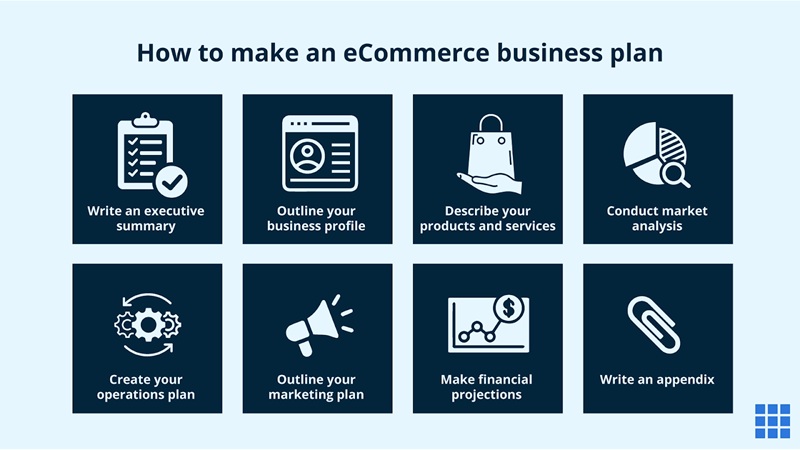
Your ecommerce roadmap starts with a business plan that guides you from concept to successful launch. The US ecommerce market will reach 333.5 million users by 2029. This growth makes proper planning crucial to stand out among competitors.
Define your goals and mission
Clear objectives should direct your ecommerce business plan. You’ll achieve long-term ambitions better by setting short-term goals as milestones. Think over setting goals for:
- Revenue growth (both from new and returning customers)
- Order volume increases (tracking new versus repeat purchases)
- Customer acquisition cost reduction
- Average order value improvement
- Retention rate boost month-over-month
Success links strongly to writing goals with vivid detail. Each goal should be SMART to work: Specific, Measurable, Achievable, Relevant, and Time-bound.
A mission statement should capture your company’s purpose. This brief declaration tells what your business does, how it runs, and why it exists. The best mission statements are short, showcase your unique qualities, meet target audience needs, set clear expectations, stick in memory, stay positive, use active verbs, and grow with your ecommerce business.
Research your competitors
Your business plan needs solid competitor analysis. This research shows what other companies do well and where you can excel.
Start by spotting direct competitors (selling similar products to the same customers) and indirect competitors (offering alternatives or targeting different audiences). Look into their pricing, ratings, reviews, revenues, and web traffic.
A spreadsheet helps track each competitor’s products, features, strengths, weaknesses, and marketing tactics. This analysis reveals market gaps and missing products.
Good competitor analysis goes beyond listing what others do. It shows your market expertise and explains your business’s key advantages.
Outline your operations and logistics
The operations section shows how you’ll run your ecommerce company. It maps the product journey from supplier to consumer.
List your suppliers, production methods, and inventory management plans. Tell whether you’ll make products or use manufacturers, and explain how much stock you’ll keep and where.
Your shipping and fulfillment strategy matters too. You might handle orders yourself, use dropshipping, or team up with a third-party logistics (3PL) provider. Each choice has benefits based on your size, order volume, and resources.
Cover daily tasks like warehousing, invoicing, and customer service. Include long-term goals such as customer and sales targets.
Return policies and reverse logistics planning show you care about the complete customer experience.
A detailed business plan keeps everything on track and helps convince investors who want to understand your company.
Register Your Business and Handle Legal Setup

A solid legal foundation protects you and your customers when starting an ecommerce business. This significant step shapes your business identity and keeps you compliant with the law.
Pick a business structure
Your choice of business structure impacts everything from daily operations to taxes and personal liability. Ecommerce entrepreneurs can choose from four main options:
- Sole proprietorship. This basic structure needs no formal registration. Your business and personal finances stay legally connected, which means you take personal responsibility for all debts and liabilities. New entrepreneurs and side businesses often choose this option, though it offers no personal liability protection.
- Limited Liability Company (LLC). You get personal liability protection and tax flexibility with an LLC. Your personal assets stay separate from business debts and legal issues. Customers and suppliers often view LLCs as more professional entities.
- Corporation. This creates a separate legal entity from its owners. You get the strongest personal liability protection through corporations, but they need complex setup and might face double taxation (at corporate and shareholder levels).
- Partnership. This works best when multiple people own a business. Limited partnerships (LP) have one general partner with unlimited liability, while limited liability partnerships (LLP) protect all partners’ personal assets.
Most ecommerce startups begin as sole proprietorships or LLCs because they’re easier to set up and manage. You can always change your structure as your business grows.
Apply for licenses and permits
Online businesses must have proper licensing. Your requirements depend on:
- Your location (city, county, state)
- Business activities
- Industry regulations
Local governments require most ecommerce businesses to have a general business license. Some products need additional permits – selling alcohol, firearms, or food products requires specific federal licenses.
You might also need:
- Sales tax permits to collect and remit taxes
- Home occupation permits for home-based businesses
- Industry-specific licenses for regulated products
Check your Secretary of State’s website to find out which permits your business needs. Filing costs vary by location and business type, ranging from free registrations to several hundred dollars yearly.
Get your EIN and open a business bank account
Your business needs an Employer Identification Number (EIN) – think of it as your business’s social security number. The IRS assigns this nine-digit identifier for tax purposes. An EIN lets you:
- Hire employees
- Open a business bank account
- File business taxes
- Apply for business licenses
The IRS website provides free EIN applications. You can complete the online process in about 30 minutes and receive your EIN right after approval. The IRS allows one EIN application per responsible party each day.
A dedicated business bank account should follow your EIN approval. This vital step separates personal and business finances, giving you several benefits:
- Personal liability protection – Business funds stay separate from personal assets
- Professional appearance – Customers can pay by card and write checks to your business name
- Business credit building – Your company builds its own credit history
- Financial organization – Tax preparation becomes simpler and cleaner
Opening a business account requires:
- Your EIN (or Social Security Number for sole proprietorships)
- Business formation documents
- Personal identification
- Initial deposit (bank requirements vary)
Banks typically offer business checking, merchant services accounts for card payments, and business savings accounts to manage your ecommerce finances.
These legal steps create a strong foundation for your ecommerce business. They protect your personal assets and establish your company as a legitimate enterprise.
Build Your Online Store
Your business has its legal foundation. The next big step is creating your online storefront. Building your ecommerce store needs careful planning because it shapes how customers will connect with your brand.

Choose an eCommerce platform
Your ecommerce platform acts as the backbone of your online store. Here are some popular choices:
- Shopify – Features an easy-to-use interface with 100+ customizable templates and over 100 payment gateway integrations
- BigCommerce – Delivers powerful features with 600+ pre-built integrations and support for 230 countries
- Wix – Blends website building with built-in marketing tools
- Square – Works smoothly with physical point-of-sale systems
Take time to think over your budget, technical skills, and growth plans before picking a platform. Most platforms let you test their features with free trials before making a decision.
Buy a domain and set up hosting
Your custom domain name (like yourstore.com) helps build brand recognition and makes it easier for customers to find you. Many platforms include hosting in their monthly plans, which takes care of technical details.
Separate purchases should focus on:
- Domain names that connect to your ecommerce business and stick in customers’ minds
- Reliable hosting that guarantees security and uptime
- SSL certificates that keep customer data safe
Design your store and add products
Platform templates let you customize your store without coding skills. Your design should prioritize:
- Simple, clean layouts that make your products stand out
- Mobile-friendly designs (63% of ecommerce purchases will happen through mobile by 2028)
- Colors, fonts, and images that match your brand
Product listings need:
- Sharp, high-quality images showing multiple angles
- Rich descriptions that handle common questions
- Current pricing and stock levels
- Smart categorization that helps customers navigate
Set up payment and checkout options
Your payment process can make or break sale – 17% of shoppers leave their carts because checkout feels too complex.
Give customers multiple ways to pay:
- Credit/debit cards
- Digital wallets (Apple Pay, Google Pay)
- Buy now, pay later options
- PayPal or other payment apps
Make checkout smooth by:
- Adding guest checkout options
- Keeping form fields minimal (most stores only need 8 fields)
- Showing progress bars that guide customers
- Using security badges that build trust (17% abandon carts due to security worries)
Your store is ready to serve customers once you have these payment systems running. The next phase focuses on getting products to your customers’ doorsteps.
Plan Your Shipping and Fulfillment

A well-planned shipping strategy shapes your customer’s satisfaction and affects your profits directly. Research shows that digital shoppers would even accept slower delivery over faster shipping if the brand provides exact delivery estimates and consistently meets those expectations. Your ecommerce business needs the right fulfillment planning.
Compare shipping methods
Each shipping option comes with unique advantages that suit different business needs:
- Economy shipping. The lowest-cost choice works best for non-urgent deliveries and lets you offer free shipping while protecting profit margins
- Flat-rate shipping. One price applies whatever the weight, making it perfect for heavy items or multiple products in one box
- Two-day shipping. Almost half (48%) of customers expect this option now
- Overnight shipping. Premium service delivers urgent items the next business day
- Same-day delivery. Local inventory helps meet urgent customer needs
- International shipping. Your customer base grows but you’ll face complex regulations and extra taxes
Pick shipping partners based on their reliability rather than cost alone. Your reputation depends more on safe delivery than saving a few dollars.
Decide on packaging and delivery times
Your brand’s packaging does more than protect items. It creates an identity, delights customers, and brings them back for more purchases. Here’s what to think about for packaging:
- Strike a balance between material costs and shipping fees (unusual sizes or heavy packaging costs more)
- Keep at least two inches of cushioning between products and the box exterior
- Eco-friendly options line up with what customers value
The time between order placement and delivery builds customer trust. Quick shipping helps businesses last longer through better operations. You can cut delivery times by:
- Reviewing supplier performance for quality and timing
- Using inventory management software to track stock
- Buying popular products in bulk
Set clear return and refund policies
Return policies shape buying decisions – 67% of shoppers look at return pages before buying. A clear policy builds trust and brings customers back.
Your policy must cover:
- Return window (usually 30-60 days after purchase)
- Item condition requirements (unused, original packaging, attached tags)
- Return shipping cost responsibility
- Time needed for refund processing
- Refund options (original payment, store credit, exchanges)
Put your policy where it’s easy to find: website footer, checkout page, and product pages. Offering one free return type like exchanges or store credit keeps customers happy while protecting your profits.
Launch and Market Your Ecommerce Store
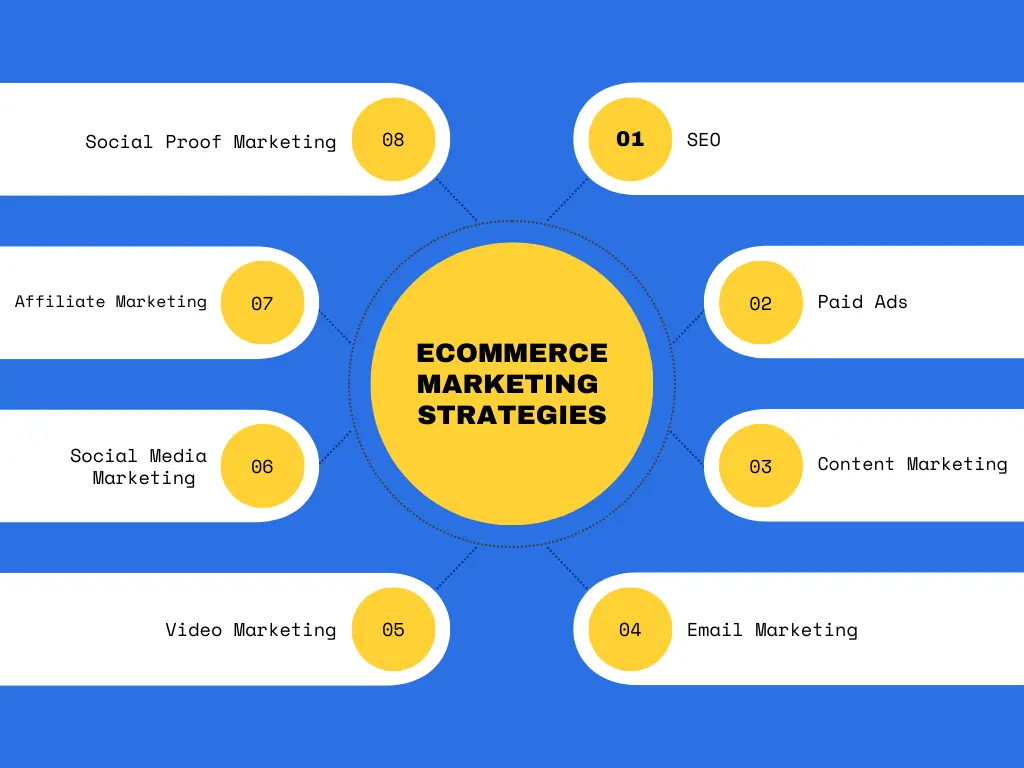
Your ecommerce store is ready. Now let’s focus on launching and marketing it to bring in customers.
Create a launch checklist
A successful launch needs careful planning. Make sure you check these crucial items:
- Test your checkout process with real transactions
- Confirm all email notifications work properly
- Check mobile responsiveness across devices
- Set up tracking codes for analytics
- Audit automated emails for proper formatting
A thorough checklist helps you avoid mistakes that could hurt your store’s first impression. Build some buzz with a pre-launch landing page to collect email addresses.
Use email and social media marketing
Email marketing brings an impressive 3,800% ROI. This beats both social media and paid advertising. Start building your email list early. You might want to give special deals to your first subscribers. Tools like Mailchimp or Klaviyo can run your welcome emails automatically. These welcome emails typically see 63.91% open rates and 14.34% click-through rates.
Social media marketing works as a discovery tool and sales channel. Half of Gen Z looks up brands on social platforms. About 87% of young shoppers bought something they saw on social media last year. Your social strategy should:
- Create content that gets people talking and sharing
- Use hashtags that help people find you
- Give great customer service on social platforms
- Share user-generated content as social proof
Run paid ads and influencer campaigns
Google Ads lets you advertise across Search, Display, YouTube and more. Businesses usually double their money on these ads. Influencer marketing keeps growing and should hit $266.92 billion by 2025. About 74% of people buy things based on what influencers recommend.
Small influencers often work better than big ones. Those with 1K-5K followers get 4.84% engagement compared to 1.06% for bigger accounts.
Track performance with analytics
Analytics help you see what’s working in your marketing. Keep an eye on:
- Website clicks and visitor behavior
- Conversion rates and average order value
- Email open and click-through rates
- Social media engagement and shares
Google Analytics shows you how customers find and use your site. Each platform’s own analytics track how well your campaigns perform. Regular checks help you spend your marketing budget wisely and get better results.
Ready to Launch Your Ecommerce Success Story
Most people who dream about starting an ecommerce business never move past the “idea” stage. They get overwhelmed by platforms, distracted by the next “winning product,” or paralyzed by fear of competition. But the entrepreneurs who win aren’t necessarily the ones with the most money or experience. They’re the ones who actually execute.
Ecommerce is not a lottery ticket. It’s a business model that rewards patience, consistency, and a relentless focus on the customer. If you expect overnight riches, you’ll be disappointed. If you’re ready to treat it like a real business – testing, learning, and iterating – you’ll build something far more valuable than quick wins: a brand with staying power.
The opportunities are wide open, but the window won’t stay this generous forever. New technologies, shifting consumer habits, and rising competition will make it harder for latecomers to grab attention. That means the best time to act isn’t “someday.” It’s now.
So, don’t overthink it. Start small, launch something real, and learn by doing. The ecommerce landscape doesn’t need more dreamers but more builders. The question is: are you willing to build?
Frequently Asked Questions (FAQ)
1. How much does it cost to start an ecommerce business in 2026?
Starting an ecommerce business can be surprisingly affordable. You can launch a basic online store for as little as $100, which covers essentials like a domain name and store theme. As your ecommerce business grows, you can gradually increase your investment in areas like inventory, marketing, and operations.
2. What are the most popular ecommerce business models in 2026?
The most common ecommerce models include Business-to-Consumer (B2C), Business-to-Business (B2B), and Direct-to-Consumer (D2C). For beginners, B2C and dropshipping are often considered the most accessible due to lower startup costs and simpler operations.
3. How do I choose the right products to sell in my online store?
To choose the right products, focus on finding a niche with low competition and validating product demand. Use tools like keyword research, competitor analysis, and market trends to identify opportunities. Look for products with strong market demand, manageable setup requirements, good profit potential, and alignment with your interests or expertise.
4. What legal steps do I need to take when starting an ecommerce business?
Key legal steps include choosing a business structure (such as sole proprietorship or LLC), applying for necessary licenses and permits, obtaining an Employer Identification Number (EIN), and opening a dedicated business bank account. Requirements may vary based on your location and the nature of your ecommerce business.
5. How can I effectively market my new ecommerce store?
Effective marketing strategies for ecommerce include email marketing, social media engagement, paid advertising, and influencer partnerships. Focus on creating engaging content, building an email list, optimizing for search engines, and leveraging analytics to refine your approach. Remember that a mix of different marketing channels often yields the best results.
